
Priority checks
Keep the author or body, title, date, ID, URL and location. Add version and date of consultation when this information is useful for tracking.
Build a reference from the document you read: title, URL, producer, dates, version, identifier and passage. Copy the result and check missing fields.
OSINT / EN
Describe the document you actually consulted. Copy the result into your records; missing fields are not inferred from the link.
Access predates publication: check the dates and the version you actually read.
Publication precision overlaps the access date: their exact order remains undetermined.
A readable working format, without APA, ISO or legal certification. Check the text before reusing it.
Record its title and producer, then a stable identifier if available. A portal home page does not identify the document you consulted.
Keep the source’s precision: do not complete a year or month with an invented day. Separate publication, version and access. A page changed after your visit may show a different state.
Specify the page, paragraph or table and check that it supports the claim. A complete reference alone does not establish that a conclusion is correct.
READING / ANNOTATED CASE
NASA’s Blue Marble record separates the photograph, the article presenting it and the access date. A short working reference can keep these elements together without assigning them the same date.
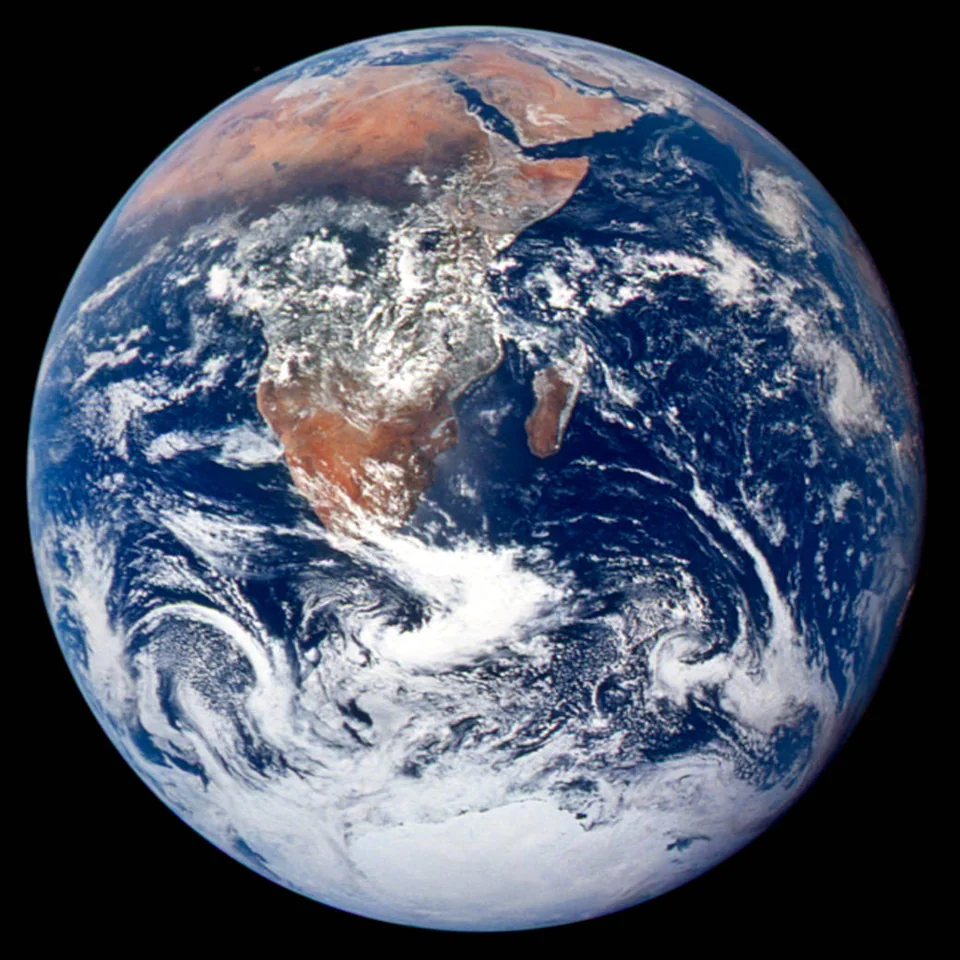
Real photograph · NASA / Apollo 17 crew · Source · Reuse
Informational editorial use with NASA attribution; no affiliation or commercial endorsement.
Real documentary case · the dates describe different objects.
On small screens, scroll the table horizontally.
| Element | Recorded value | Purpose |
|---|---|---|
| Producer | NASA · Apollo 17 crew | Credit the photograph separately from commentary. |
| Record title | The Blue Marble: The View From Apollo 17 | Identify the consulted page and its exact URL. |
| Capture | 1972-12-07 | Date the image, not the page reproducing it. |
| Record publication | 2020-04-20 | Date the consulted article without making the image recent. |
| Access | 2026-10-15 | State when the record and passage were reviewed. |
NASA. The Blue Marble: The View From Apollo 17. Record published 20 April 2020; photograph taken 7 December 1972, credit NASA / Apollo 17 crew. Passage used: paragraph identifying the capture date and crew. Record URL below; accessed 15 October 2026.
Record ‘date not stated’ or ‘version unspecified’. The access date does not fill the gap. For a changing document, retain the exact title, passage and accessible version, subject to applicable permissions.
References accessed on
Cite the precise page and version read. A portal title, search engine or access date does not replace the document date. Missing information stays missing; retain the uncertainty in your record.
It is an explicit working reference, not a certified APA, ISO or legal format. Adapt it to the recipient’s rules while retaining identifier, version, passage and provenance.
A DOI identifies a research resource, a notice number an administrative publication and a scene identifier an acquisition. A reference should identify the object actually used.
Compare the title, author or organisation, identifier and version with the open document. Identify the passage supporting your claim and distinguish its date from your access date. If a field is missing, say so instead of inferring it from the filename or portal.
DEEPER READING / PRACTICE
A document is cited by its title but there are several versions. The reference must provide sufficient elements to identify the document actually consulted and the passage used.
Updated on .
Keep the author or body, title, date, ID, URL and location. Add version and date of consultation when this information is useful for tracking.
A very short reference can become ambiguous after an update. Only an URL does not explain which part of the document supports the statement.
The bibliographic record accompanies the relevant passage and its interpretive limits. Mark unknown information explicitly instead of filling it in by assumption.