
Document identity
Compare DOI or another identifier, title, authors and publisher. A title or suffix error may identify a different object.
Record to retain · Exact identifier and destination page
GUIDE / RESEARCH
A reference found in a search engine, AI answer or citation graph is a starting point. Check the exact document, its version and the passage that actually supports the claim.
01 / GUIDE / RESEARCH
A DOI identifies a resource; ORCID distinguishes people and ROR organisations. These identifiers alone do not assess methods or findings. PubMed provides citations and abstracts with links to available text; HAL and repositories may hold different document types and versions. First write down the claim to check and the relevant period.
Guides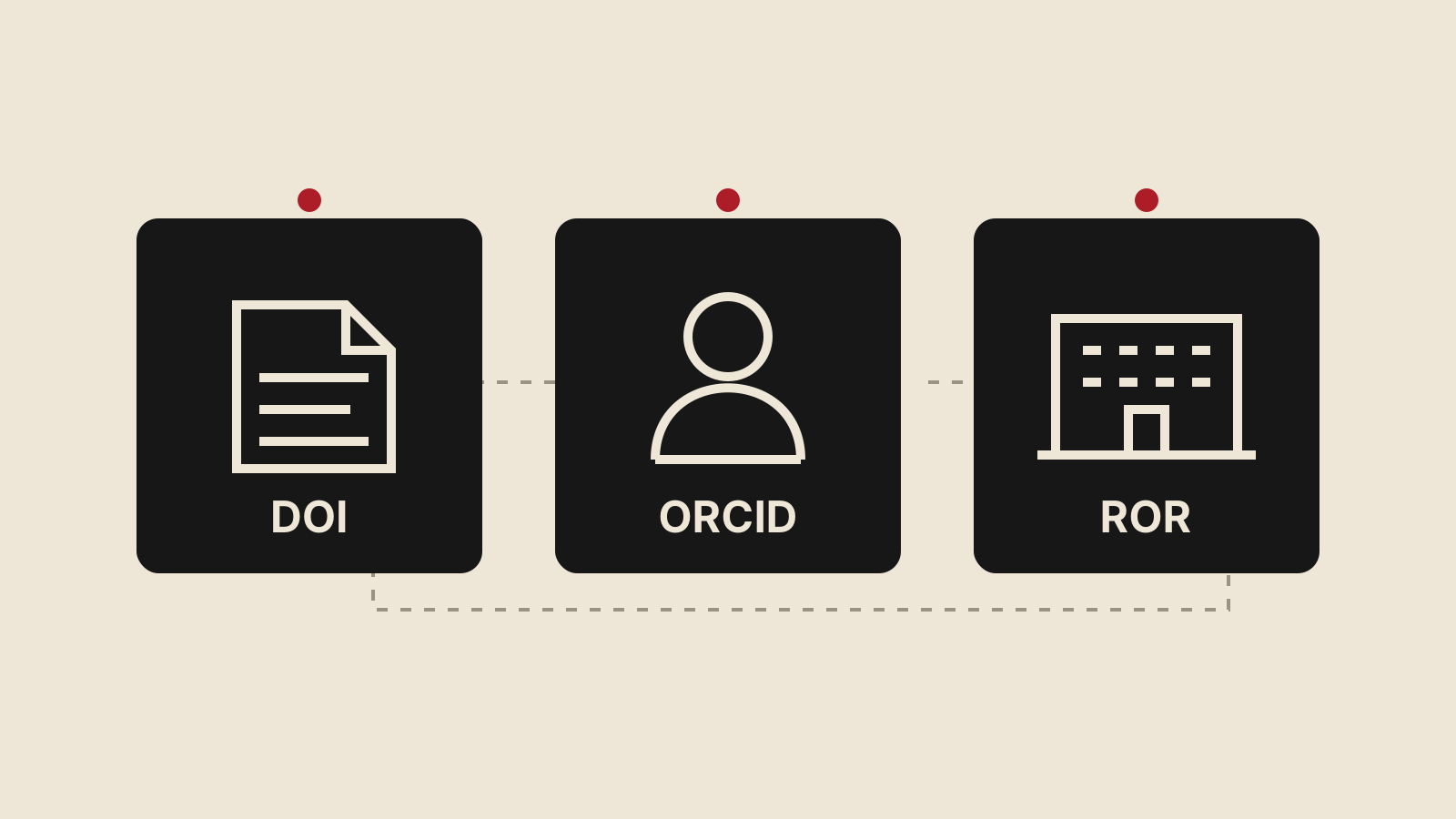
02 / GUIDE / RESEARCH
Check the consulted object without treating citation counts or open access as a truth label.
Compare DOI or another identifier, title, authors and publisher. A title or suffix error may identify a different object.
Record to retain · Exact identifier and destination pageDistinguish preprint, accepted manuscript, published version, data and software. Record the file version, not just metadata.
Record to retain · Type, version, file and dateCheck ORCID where available and compare affiliations with the document. Use ROR to resolve an ambiguous organisation.
Record to retain · Identifiers and relevant dated affiliationRead linked notices and the publisher page; retain reported corrections, withdrawals and changes instead of leaving an old conclusion intact.
Record to retain · Notice, date and linkOpen the text and locate the table, figure or paragraph. Record population, period and conditions required to understand the measure.
Record to retain · Precise locator and scopeFollow declared repository or registration links; compare versions, files and planned methods with the reported result.
Record to retain · Repository, version, licence and deviations03 / GUIDE / RESEARCH
Keep a short chain between question, text and conclusion.
Search DOI or exact title in Crossref, DataCite or the relevant index, then open the publisher or repository resource.
Record type, date and version; check update notices. If only an abstract is accessible, retain that limitation.
Compare the passage with your question. Correlation, findings in a limited population and general conclusions are not interchangeable.
Keep identifier, URL, version, passage and access date. Do not count two records of one work as independent confirmations.
04 / GUIDE / RESEARCH
Methodological reading cases without invented findings or researchers.
Check existence and the precise passage. A real reference may be assigned to the wrong author or fail to support the generated sentence.
Read the dossierCompare identifiers and versions. PubMed, Europe PMC and a repository may describe one work with different files or metadata.
Read the dossierCompare ORCID, publications, dates and affiliation; retain separate hypotheses until attributes support a match.
Read the dossierOpen the relevant dated registration. Compare planned criteria, population and findings; absence in one register does not establish absence everywhere.
Read the dossierCite the precise page and version read. A portal title, search engine or access date does not replace the document date. Missing information stays missing; retain the uncertainty in your record.
Compose a public-source reference05 / GUIDE / RESEARCH
06 / FAQ
No. It may identify data, software or preprints, among other objects. Read the document type and editorial process.
No. PubMed holds citations and abstracts; links may lead to PubMed Central or the publisher. Retain the version actually opened.
No. Check the field’s provenance and dates and the institution’s information; the public record may be partial.
No. Checking updates complements reading methods and limits; it is not comprehensive scientific validation.
State that you consulted the abstract and restrict the claim to what it shows. Do not imply that you reviewed files or the complete method.
07 / Discuss a context
A useful record identifies the object, the version read and the conclusion’s scope.