

LLMO · CITATIONS
LLMO & citations in AI answers
Guide to LLMO, AI citations, generative visibility measurement and answer reliability by Alexis Roux ZG.
Read guideAI-generated illustration

LIBRARY / GUIDES
Reference material designed to understand a subject, frame a diagnosis and act without depending on opaque jargon.
Start with the central guide
01 / SEO · SXO · GEO
Build a presence that search engines discover, people understand and generative systems can cite accurately.
Read guideAI-generated illustration
TOOLS / REGISTERS
Choose a worksheet by theme or keyword. Read its rule, fields and filled fictional excerpt to distinguish observations, unknowns and the next check.
02 / INDEX
Each guide answers a precise question and sets out a method, outputs, limits and the next useful decisions.
Guide to LLMO, AI citations, generative visibility measurement and answer reliability by Alexis Roux ZG.
Read guideAI-generated illustration

Guide to editorial architecture, internal linking, expert content and topical authority by Alexis Roux ZG.
Read guideAI-generated illustration

Evidence doctrine, source qualification, confidence levels and explicit correction by Alexis Roux ZG.
Read guideAI-generated illustration

Measurement protocol for SEO, GEO, LLMO, AI citations and entity accuracy by Alexis Roux ZG.
Read guideAI-generated illustration

Audit, OSINT, reputation, AI visibility and mission-direction scenarios by Alexis Roux ZG.
Read guideAI-generated illustration

A practical protocol to diagnose URLs, status codes, canonicals, languages, rendering and images before publishing more content.
Read guideAI-generated illustration

An editorial traceability method linking important claims to a source, date and confidence level.
Read guideAI-generated illustration

A repeatable protocol for tracking generative answers, cited sources, errors and differences between interfaces.
Read guideAI-generated illustration

Separate search crawling, indexing and training collection, then test robots rules and actual HTTP responses.
Read guideAI-generated illustration

Align names, roles, sources, public profiles and structured data to identify a person or organisation without visibility promises.
Read guideAI-generated illustration

A method to check each language, hreflang links, canonicals, real content and user journeys without confusing translation with localization.
Read guideAI-generated illustration

A protocol to inventory models, data, tools, vendors, costs and exit options before a dependency becomes critical.
Read guideAI-generated illustration

A protocol for checking that markup matches visible content, stays consistent across languages and passes validation without promising rich results.
Read guideAI-generated illustration

A test protocol covering accuracy, refusals, permissions, tool failures and human takeover before an AI agent is allowed to act.
Read guideAI-generated illustration

A maintenance protocol for reviewing sources, dates, links, translations and outdated pages without publishing redundant material.
Read guideAI-generated illustration

A method to review keyboard use, screen reading, forms, contrast and errors in a real journey, then document fixes.
Read guideAI-generated illustration

A protocol connecting field data, controlled tests and technical causes for loading, responsiveness and visual stability.
Read guideAI-generated illustration

A method to review comprehension, input, validation, privacy and confirmation in a real form.
Read guideAI-generated illustration

A method to review purpose, provenance, rights, alt text, context, formats and discoverability of editorial images.
Read guideAI-generated illustration

An OSINT method to distinguish origin, publisher, repetition, interest, independence and limits of a public source.
Read guideAI-generated illustration
A protocol separating event, publication, edit, discovery and republication dates in a monitoring timeline.
Read guideAI-generated illustration

An OSINT protocol for organisations, domains, roles and visible relationships without mistaking namesakes for proven links.
Read guideAI-generated illustration
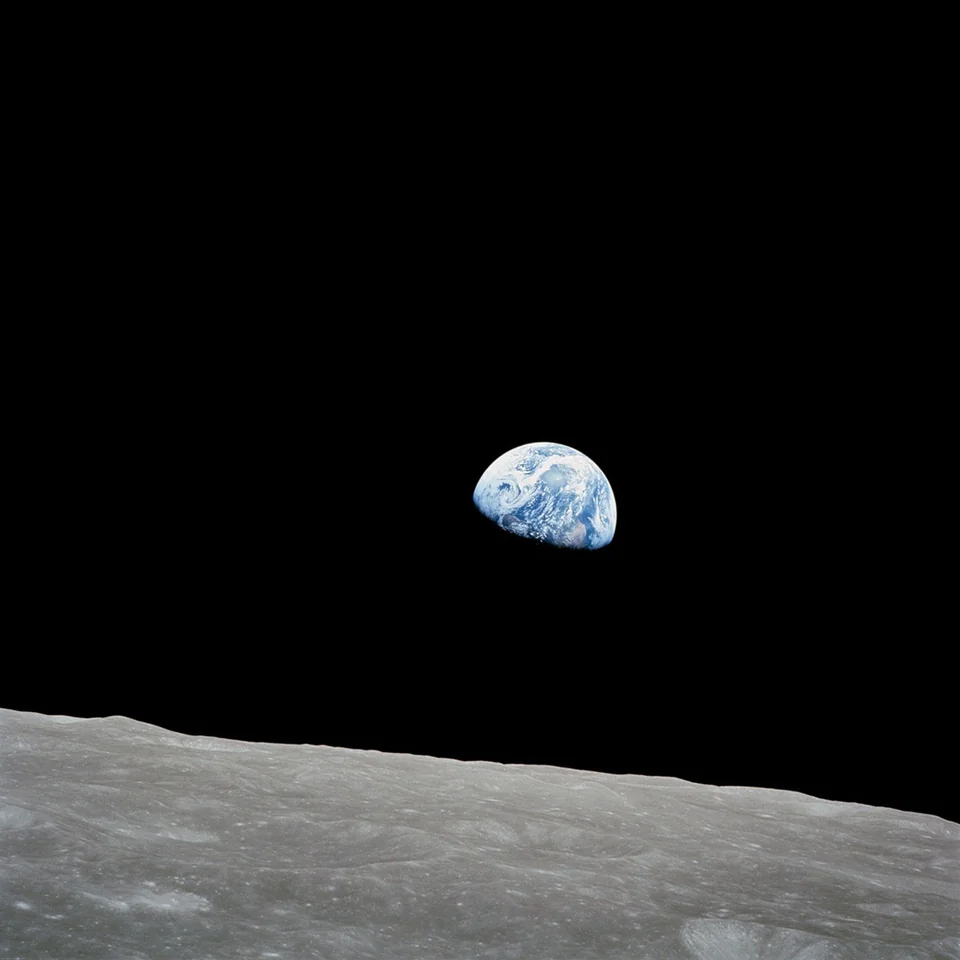
A method to inspect origin, earliest known occurrence, place, date, edits and limits of an image circulating online.
Read guideReal photograph · NASA / Bill Anders · Source · Reuse
Informational editorial use with NASA attribution; no affiliation or commercial endorsement.

A method to find a decision, identify its type, cite exact passages and test the scope of a public claim.
Read guideAI-generated illustration

A protocol for checking coverage, method, version, licence and limitations before analysing or publishing public data.
Read guideAI-generated illustration

A method for comparing search engines and AI assistants through sources, freshness, language, accuracy, journeys and data context.
Read guide
A method for connecting a claim to primary records, versions, transformations and limits before publication or decision.
Read guideAI-generated illustration

A multilingual publishing method covering factual parity, navigation, hreflang, HTML language, images, forms and post-update checks.
Read guideAI-generated illustration

A method for selecting, describing, optimizing and publishing editorial images with context, rights and variants.
Read guideAI-generated illustration

A method for describing pages, entities and articles in JSON-LD without exceeding visible facts or promising rich results.
Read guideAI-generated illustration

A method for comparing open statistics by checking populations, definitions, units, versions and uncertainty.
Read guideAI-generated illustration

A method for connecting pillar pages, guides, protocols and sources with understandable, testable links.
Read guideAI-generated illustration

SIREN, SIRET, Sirene, RNE and BODACC: choose sources, distinguish legal units from establishments, compare dates and document a company.
Read guideAI-generated illustration

DOI, ORCID, ROR, HAL, PubMed and open repositories: find full text, distinguish versions and authors, check updates, data and the scope of a reference.
Read guideAI-generated illustration

Identify a web capture, retain original and archived URLs, separate dates and examine version changes without inventing continuity.
Read guideAI-generated illustration
Where to start?
Choose your question. Each path connects existing methods, useful sources and an outcome you can document. Stop at the step that answers your need.
Before merging records, check object type, identifier system, dates and contradictions. Distinguish duplicates, namesakes, establishments and related organisations.
Check changes, percentage-point gaps and combined rates. Formulas and calculation bases remain visible so the result can be reviewed.
Methods for reading, searching, monitoring, migrating and testing a multilingual corpus with evidence and inspection criteria.
Worked exercises available : 51
Start from a claim and find the document, version and status. The expected output is a verifiable reference retaining the qualifications that limit the conclusion.
Find a figure, understand its scope and cite the right passage: a method for reading reports, annexes and tables while retaining their qualifications.
Move from a scanned page to verified information: check characters, tables, reading order and languages before searching, calculating or citing automatically recognized text.
Connect procedures, lots, participants, amounts and versions: use public notices for documented monitoring without treating an intention, estimate or award as evidence of payment.
Distinguish publication, application, family, claims and legal events: document technical research without treating a title or aggregated record as permission to operate.
Count original records rather than links: identify republication, shared data and distinct observations before drawing a conclusion.
Before citing a study, identify its editorial status, update notice and the passage affected by a correction or retraction.
Connect identity, notice and register version while distinguishing registration, activity and establishments.
Distinguish valid, invalid and unavailable responses, then retain the dated result.
Choose REGAFI, ORIAS or EBA for the activity and check contact details separately.
Connect protocol, history, posted results and publications without counting one trial twice.
Keep the original, language version and translated passage so a quotation can be checked.
Link important claims to source passages and check numbers, versions, omissions and uncertainty.
Break down the disagreement, compare dates and scope, and keep uncertainty visible in the conclusion.
Keep queries and limits to separate no results from evidence of absence.
Check keys, schema and units before matching tables. Local tools help detect duplicates, changes between versions and differences in scope.
Connect source file, dates, schema and transformations: retain data that can be located, compared and reused without confusing an update, correction or change of scope.
Define the request, check pagination, distinguish errors from absence and preserve the raw response before transformation.
Matching names, sizes or appearances do not establish identical versions. A SHA-256 digest represents file bytes. It helps detect changes without establishing authorship, creation date or truth of the contents.
Measure empty keys, duplicates, unmatched rows and row multiplication before publishing linked data.
Separate real change, definition changes and revisions before calculating growth.
Describe row grain, columns, types, units, missing values and keys before calculations or joins.
Connect each resource to its exact licence and retain attribution, version and relevant obligations.
Separate calendar dates, local times and instants before sorting records or converting to UTC.
Separate zero, absence, confidential, estimated and provisional values before calculations and charts.
Check codes, aggregate membership and territorial versions before joining files or comparing years.
Retain currency, scale, period, price basis and method when comparing budgets, grants or procurement amounts.
Identify the structure, codes and attributes of a statistical extract before comparing values.
Distinguish dataset, distribution, service and catalogue record before downloading or citing public data.
Check axes, units, reference system and precision before creating a GeoJSON point.
Separate format, check digit, assignment and matching when linking authors, publications and versions.
Check structure, missing values, duplicates and keys without changing the original file.
Separate successful responses from complete collection and reconcile cursors and retrieved identifiers.
Recalculate change and state its base, unit and denominator.
Choose the correct time basis before adding values or comparing periods.
Preserve identifiers and dates, flag interpretable cells and test the actual import journey.
Connect each check to a URL and a real journey: HTTP response, languages, redirects, rendering and recovery. Keep defect evidence and correction checks.
Build representative queries, check results by language and improve journeys without confusing the existence of search with successful discovery.
Map destinations by language, preserve journeys and test routes: prepare URL changes without losing useful content.
Review headings, columns, spacing and photographs against reading tasks: a testing method for wide screens, smartphones and every language.
Test from discovery to decision: an acceptance plan connecting navigation, search, language switching, tools, forms and error recovery.
Define what must roll back, retain a coherent version and verify recovery: a practical plan for files, data, languages, caches and user journeys.
Separate served files, required data and working artifacts: reduce a project while preserving useful pages, languages and media.
Separate technical success, received content, redirects, restrictions and transport errors.
Find a citation’s useful destination, preserve context and distinguish migration, login and error.
Explain what changed, why, with which evidence and in which language versions.
Find added or removed URLs, duplicates and lastmod or hreflang changes, then check their consequences on the pages.
Define what is counted, when and under which conditions. Retain failures, denominators and calculation rules when interpreting a change.
Choose sources, recognise real novelty and retain history: build monitoring that produces useful information rather than a pile of notifications.
Separate observed rate, sample size and statistical uncertainty when interpreting an AI answer observatory.
Define population, selection, repetitions and exclusions so test results can be interpreted.
Test reader delivery, preserve identifiers and detect silent collection gaps.
Time complete tasks, retain failures and separate apparent speed from accepted results.
Test the boundary between retrieved evidence, a generated proposal and a genuinely authorized action.
Check that a retrieved document remains evidence to analyse rather than permission to change the task or call a tool.
Separate proposal, authorization and execution, then check target objects, confirmations and the effects of a retry.
No guide matches. Clear a filter or use fewer words.
Topic pages to select a service and understand what its result can establish.
AI-generated illustration
Choose an identity register, notice, VAT validation or authorisation register for the fact to establish.
16 results

AI-generated illustration
Retrieve the text, version and procedure while separating decisions, announcements and commentary.
6 results

AI-generated illustration
Choose a producer, catalogue or series by unit, coverage and research question.
23 results

AI-generated illustration
Document an older page or infrastructure while retaining observation dates and limits.
5 results

AI-generated illustration
Choose a map, collaborative object or satellite product by scale and observation date.
6 results
AI-generated illustration
Locate a publication and then verify territory, procedure and title status in the relevant registry.
6 results

AI-generated illustration
Separate work, author, organisation, repository, journal and trial to cite the right object and version.
14 results
03 / METHODS
Start with the decision at hand. Each method produces a different form of evidence; the protocols can then be combined.
These protocols complement the catalogue’s practical guides. Use the filter to choose a starting point; several methods can work together.
No matching protocol. Try another term or reset the filters.
AI-generated illustration
An important page is missing from search or a migration changed URLs.
Expected result : A register of URLs, obstacles and fixes to recheck.
Open protocolAI-generated illustration
Public claims need verification and maintenance.
Expected result : Dated sources, their scope and an update owner.
Open protocolAI-generated illustration
You need to observe how assistants describe an entity or cite content.
Expected result : Comparable observations, with errors and verified links.
Open protocolAI-generated illustration
Crawler access rules should match intended uses.
Expected result : A matrix of page, crawler and actual served response.
Open protocolAI-generated illustration
A person or organization is confused with another.
Expected result : A consistent identity, official links and sourced assertions.
Open protocolAI-generated illustration
Language versions exist but journeys switch language or meaning.
Expected result : A matrix of variants, signals and editorial gaps.
Open protocolAI-generated illustration
A function relies on a poorly understood model, vendor or data flow.
Expected result : A component map, failure points and a tested fallback.
Open protocolAI-generated illustration
Markup misrepresents the page or has errors.
Expected result : A record of fields, discrepancies and post-fix validation.
Open protocolAI-generated illustration
An agent will act through tools and permissions.
Expected result : A test set, traces and a bounded release decision.
Open protocolAI-generated illustration
Pages become outdated, redundant or uneven across languages.
Expected result : A review register, merge decisions and verified corrections.
Open protocolAI-generated illustration
A journey excludes users or remains difficult by keyboard.
Expected result : Scenarios, reproduced defects and post-fix retests.
Open protocolAI-generated illustration
A page feels slow or scores and experience disagree.
Expected result : A measurement distribution and verified technical causes.
Open protocolAI-generated illustration
Requests fail or error messages do not support recovery.
Expected result : A case matrix, server responses and a retested journey.
Open protocolAI-generated illustration
Images lack context, rights evidence or alternatives.
Expected result : An image register with roles, rights and corrections.
Open protocolAI-generated illustration
A public claim circulates without a clear origin or corroboration.
Expected result : A provenance record, reuse chain and bounded conclusion.
Open protocolAI-generated illustration
Announcements and captures appear to tell different sequences.
Expected result : A dated timeline separating event, publication, observation and correction.
Open protocolAI-generated illustration
Organizations or accounts appear connected without an established relation.
Expected result : An entity map with documented links and unconfirmed hypotheses.
Open protocolAI-generated illustration
An image is tied to a disputed place, date or event.
Expected result : Known versions, context clues and limits of the conclusion.
Open protocolAI-generated illustration
A public decision is cited from a summary or without its procedural state.
Expected result : An exact citation, bounded passage and later steps to check.
Open protocolAI-generated illustration
A dataset looks current and complete, but its file and method have not been checked.
Expected result : A reuse decision grounded in coverage, version, licence and limitations.
Open protocol04 / READING PATHS
Four short paths start from the problem to solve: visibility, evidence, decisions or data reuse.
SEO, SXO and GEO → editorial architecture → AI visibility measurement.
Follow this path02 / EVIDENCEEvidence doctrine → AI citations → source architecture.
Follow this path03 / DECISIONMeasurement → intervention scenarios → strategic audit.
Follow this path04 / DATAListing and licence → file and method → version and limitations → traceable claim.
Follow this path05 / GLOSSARY
The glossary defines the essential concepts before methods and trade-offs are explored.
DEEPER READING / PRACTICE
A guide becomes useful when it allows you to conduct a check and explain the result. The reading should therefore focus on the information to be kept as well as on the succession of the steps.
Updated on .
Identify the necessary entries, the expected output and the limits of the method. Try the protocol on a simple case before applying it to a large corpus.
Following the steps without understanding their purpose can give a facade conformity. An unexpected outcome deserves an investigation, even if all the cases of the procedure are scratched.
A application sheet preserves the chosen case, the steps carried out, the differences encountered and the authorized conclusion. It makes it easier to compare two executions of the same guide.