
Map the variants
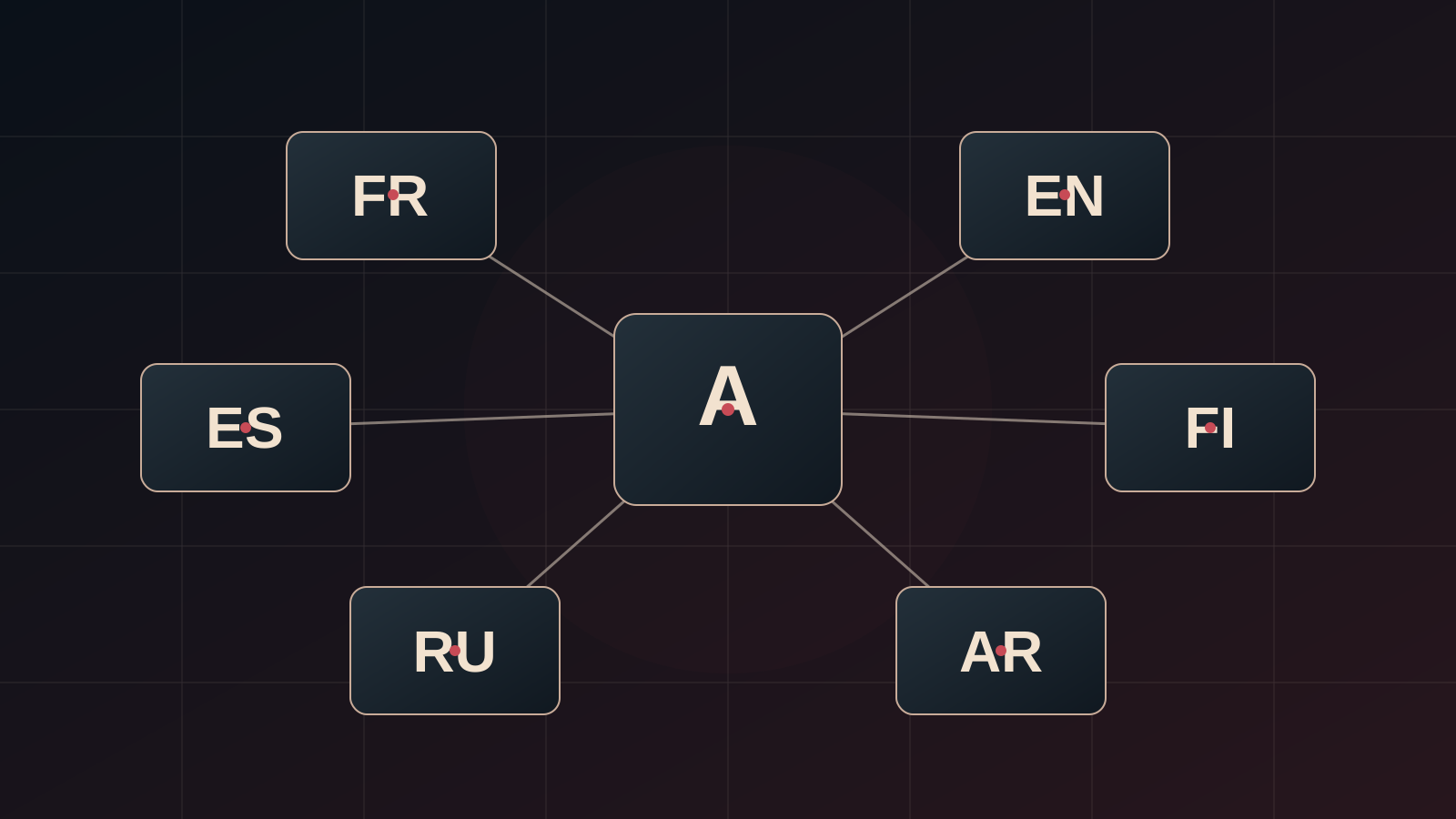
For each canonical page, record available languages, URLs, missing variants and pages with genuinely equivalent topics.
GUIDE / PROTOCOL
A language version should answer its reader in that language and lead to the right page throughout the journey.
Direct answer
Inventory pages and variants, then compare technical declarations with the content actually served. A valid URL is insufficient when text, links, forms or images send readers to another language.
01 / Review method
For each canonical page, record available languages, URLs, missing variants and pages with genuinely equivalent topics.
Check status, self-referencing canonical per language, reciprocal hreflang, x-default, sitemap and the document lang attribute.
Review headings, menus, cards, FAQs, forms, validation messages, internal links and image alternatives in every language.
Switch language mid-journey, follow links, submit dummy data and check mobile rendering, including right-to-left layouts.
02 / Evidence to keep
One row per page intent, with variants, status, canonical and reciprocity.
Title, main answer, navigation, form and check date for each language.
Untranslated string, wrong-language link, missing variant or changed meaning, with priority.
Have decisive text checked by a proficient reader and record corrections.
AFTER THE REVIEW
Do not declare hreflang to a page answering a different intent. Build a useful counterpart or leave the relation absent and guide readers another way.
Connect variants of the current page, then test the full journey, forms and internal links in every language.
03 / FAQ
No. An equivalent translated page may declare its own URL as canonical.
Yes, if available pages have value and omissions are explicit; do not declare a nonexistent variant.
Labels, errors, acknowledgements and redirects can remain in another language after the page appears translated.
Add regional variants only when the content or offer genuinely differs, and document the target codes and URLs.
04 / Official references