
Retain both addresses
Record the original URL and the capture actually read. Recheck the destination after navigation: an archive may lead to another date or the live web.
Record to retain · Original URL, capture URL and final destination
GUIDE / ARCHIVES
An archive helps recover an older trace. To use it, identify exactly what was observed: a resource, a capture and a passage at a specified time.
01 / GUIDE / ARCHIVES
Define the question before opening a calendar: are you seeking wording, an available document or a page change? Record relevant URL variants. Separate visible information from unknowns; a domain name proves neither its historical author nor continuity of its content.
Guides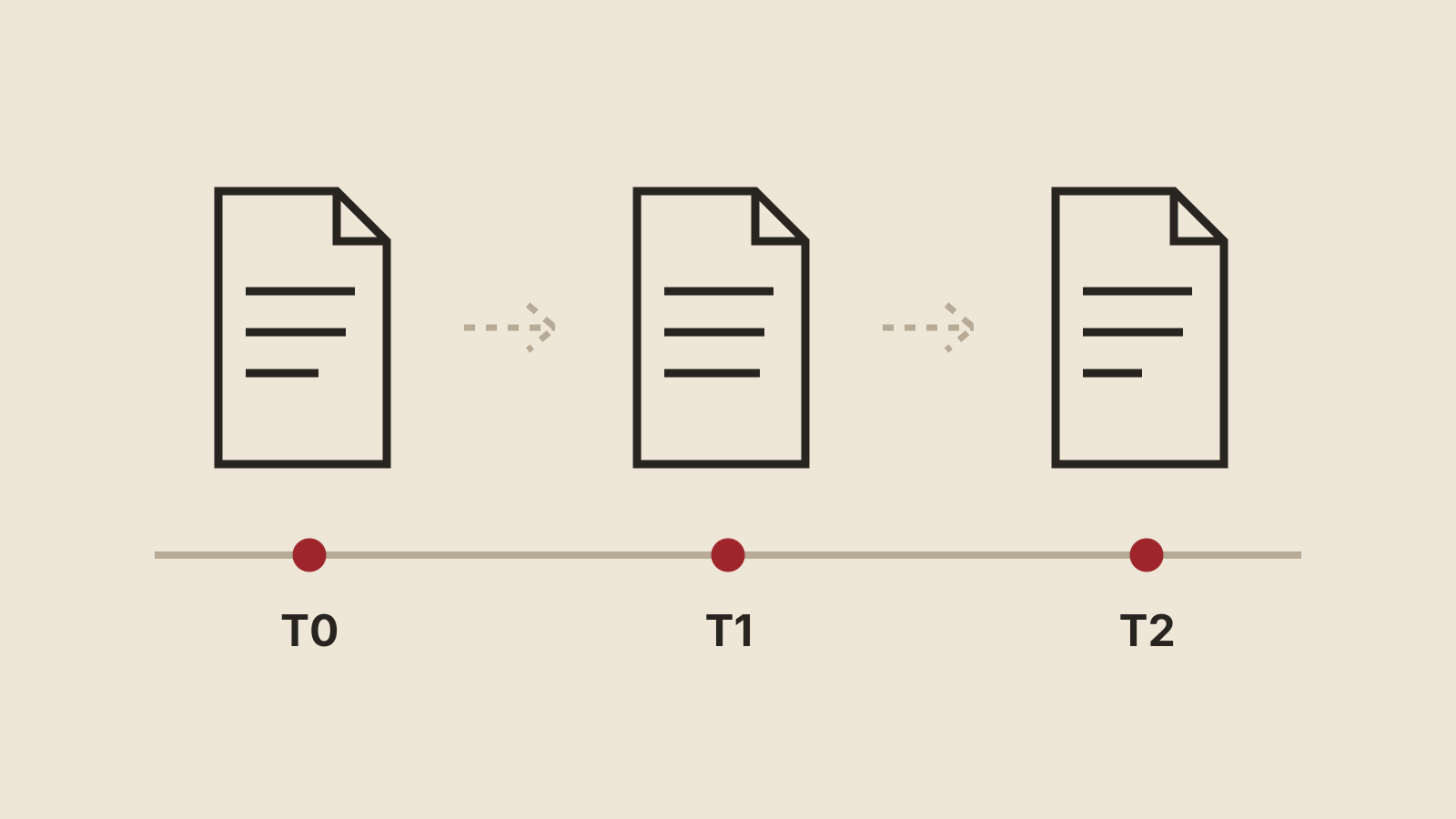
02 / GUIDE / ARCHIVES
These checks document an observation; they do not automatically certify evidence or reconstruct unobserved periods.
Record the original URL and the capture actually read. Recheck the destination after navigation: an archive may lead to another date or the live web.
Record to retain · Original URL, capture URL and final destinationDistinguish the date displayed in the document, capture and consultation. Do not turn the first recovered observation into a certain creation date.
Record to retain · Dates, known precision and retained wordingRetain title, used fragment and context. An isolated sentence may omit a qualification, negation or applicable period.
Record to retain · Passage, title and immediate contextInspect useful text, images and links separately. Replay does not guarantee that components or functions were preserved.
Record to retain · Examined components and missing elementsCompare the same resource and passage across captures. Do not call a redirect, different file or display failure an editorial change.
Record to retain · Versions, observed difference and competing explanationAn absent capture alone does not establish absent publication. State the actually observed interval and what cannot be established.
Record to retain · Search scope and explicit qualification03 / GUIDE / ARCHIVES
Build a small review record before producing a timeline or historical narrative.
Record the question, explored URLs, useful period and exclusions. Keep searches without results as part of the method.
Open the document, check its destination and locate the passage. Record visible information rather than completing unknown dates.
Compare observations, differences and omissions. Treat change as a hypothesis while another explanation remains plausible.
Cite the capture, retain qualifications and have a reviewer repeat the route. Revisit it if a fuller resource is found.
04 / GUIDE / ARCHIVES
The record depends on the question the trace must answer.
Compare passages and destinations, then describe both observations. Do not infer an intention to remove content solely from the difference.
Read the dossierRecord each destination and its capture separately; do not attribute all navigation to the starting page’s date.
Read the dossierDescribe readable and missing elements. Narrow the conclusion if the missing component is essential to the claim.
Read the dossierPrepare a reference with addresses, passage and dates; attach limitations so the recipient knows what still requires checking.
Read the dossierCite the precise page and version read. A portal title, search engine or access date does not replace the document date. Missing information stays missing; retain the uncertainty in your record.
Compose a public-source reference05 / GUIDE / ARCHIVES
06 / FAQ
It dates a recovered observation. A publication date requires separate evidence identified and interpreted in context.
No. Describe available observations and the search without treating the calendar as an exhaustive history.
It helps show a passage but does not replace addresses, version and dates in the record.
No. An archiving format does not resolve interpretation: retain relevant resources and check what the document supports.
No. The composer assembles entered fields; check the record against the resource actually read.
07 / Discuss a context
Describe the question, recovered versions and qualifications that could change the decision.