
Crossref
https://api.crossref.org/works?rows=1
DocumentationIn-depth practical guides
Define the request, check pagination, distinguish errors from absence and preserve the raw response before transformation.
Updated :
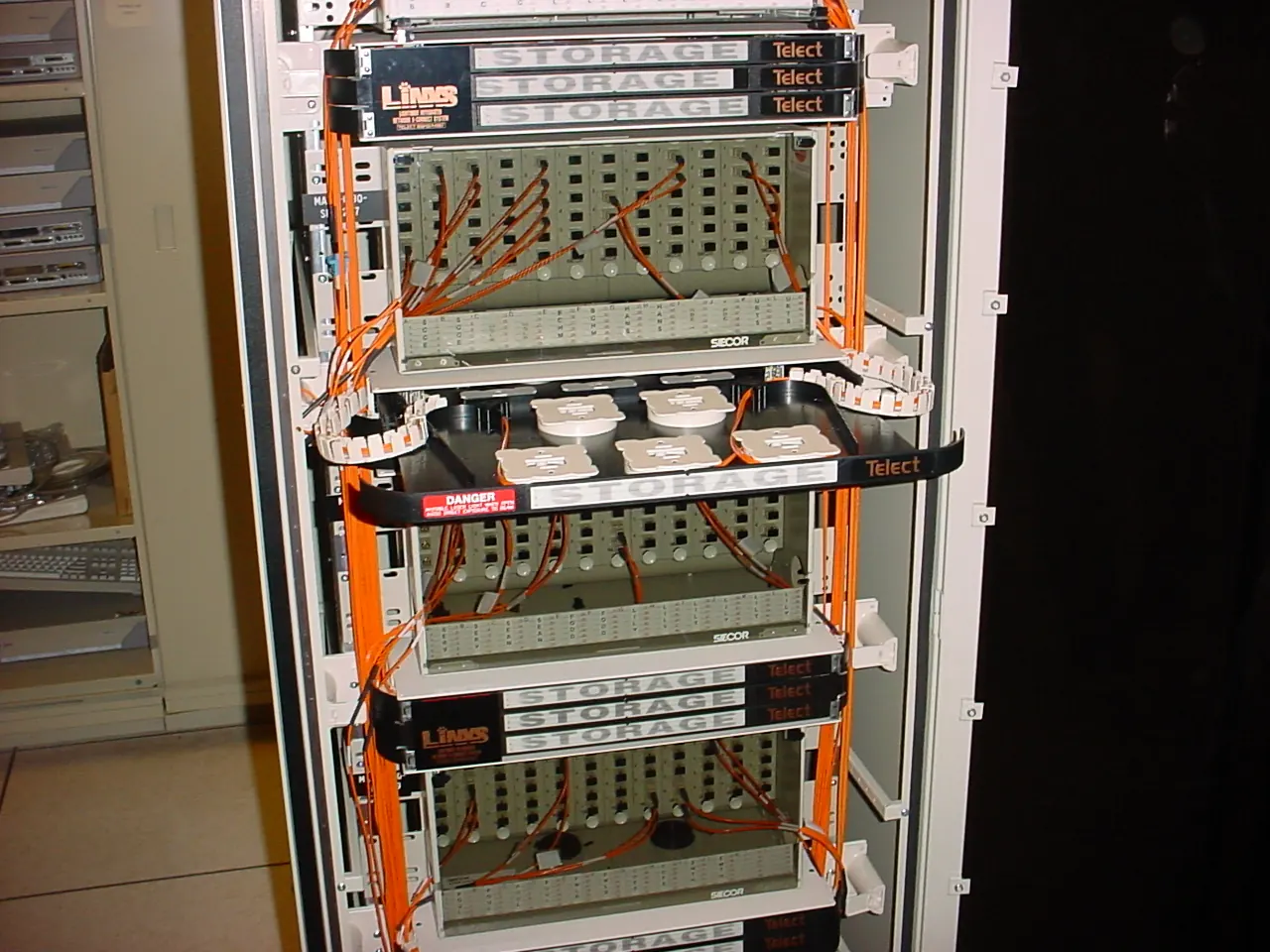
A fiber-optic patch panel photographed by Patrick Finnegan in 2002. Documentary context photograph; it does not depict an Alexis Roux ZG assignment or equipment. © Patrick Finnegan · Source · CC BY 2.0. Resized and converted to WebP; cropped display.
An API returns a response to a request using a schema at a particular time. This does not mean the whole database was requested or that data stayed unchanged between calls. Retain selection, technical states and received data separately from analysis.
Read official documentation for version, scope, terms, authentication and volume limits. For an entire database, look for an official bulk export; search APIs can cap coverage.
Record endpoint, method, parameters, filters and sorting. Prefer stable identifiers to ambiguous names. Never publish keys or tokens in request logs.
Record HTTP status, reception time, format and errors. Check fields and units. HTTP 200 may still contain empty data, business errors or a changed schema.
Check announced totals and page or cursor mechanics. Count rows and unique identifiers, record duplicates and the stopping condition. Changing data can affect successive pages.
Keep raw responses and their digests. Document cleaning, filtering and conversion; link outputs to the original extract. Do not publish personal data or secrets in public logs.
Respect retry guidance for HTTP 429 or unavailable services instead of unlimited retries. A fresh extract is a new observation: compare schema, parameters and scope too.
These addresses illustrate syntax; check availability, authentication and terms in the documentation.
Typical situations for preparing a check. They do not describe completed assignments or actual observations.
A populated file may cover only part of the selection. Inspect totals, page size and next cursor before publishing a count.
Keep null, missing fields, empty arrays and zero distinct. Conversion can change averages or rankings.
Eurostat documents a database holding the latest dataset versions. Retain dated extracts to reproduce earlier calculations.
No. Inspect body, filters, totals and pagination.
No. Choose the useful scope and document its limits.
It compares preserved file bytes. Methods and data quality require their own checks.