Primary object
Open the original document, dataset, image or recording. A search result or summary is insufficient when the underlying record is available.
Record to retain · Exact URL and identifier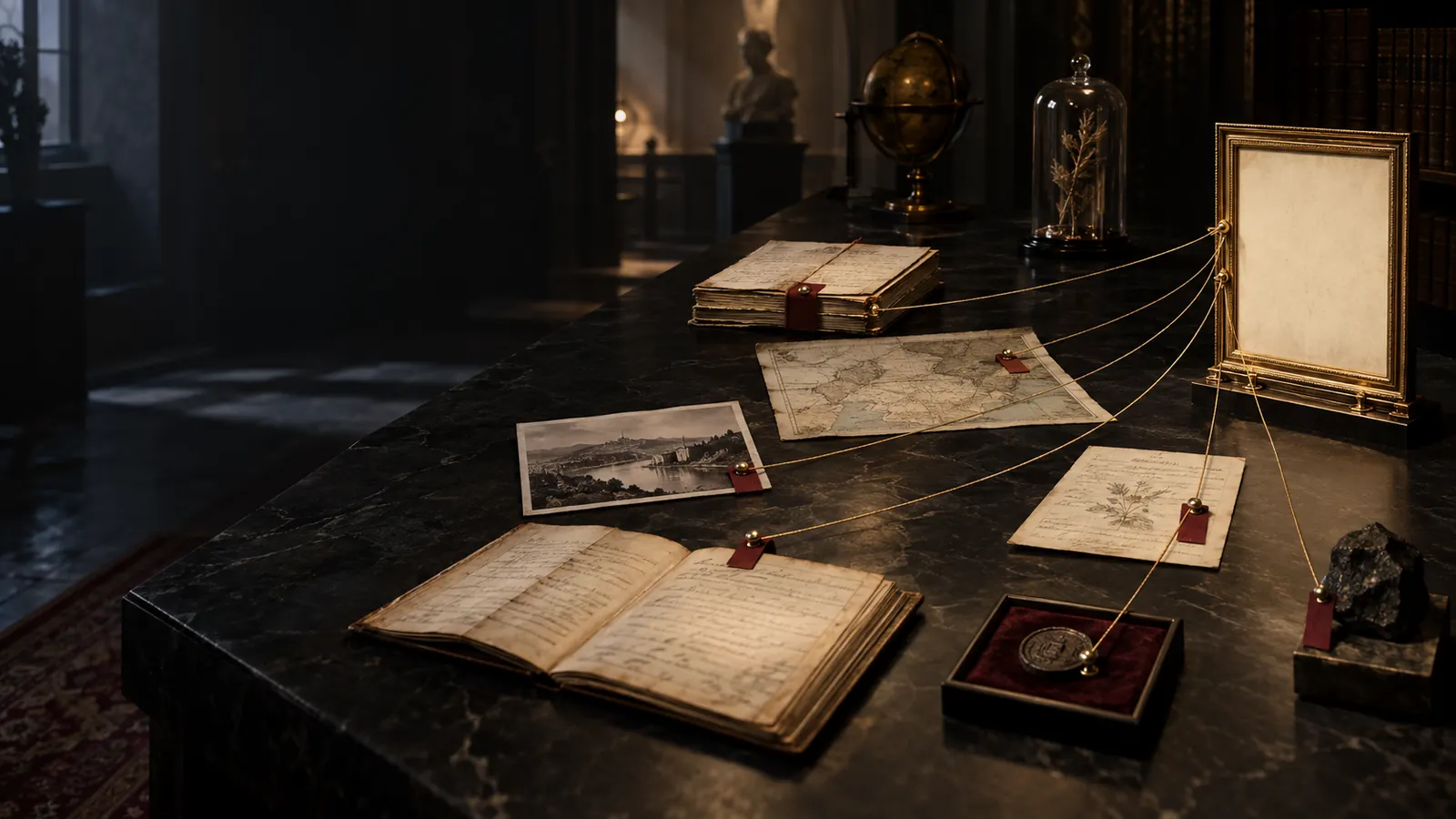
GUIDE / EVIDENCE
A citation, screenshot and figure may appear to agree while all deriving from one source. An evidence chain exposes every step.
01 / GUIDE / EVIDENCE
Write down the precise claim, its date and the decision it should inform. Split it into testable facts: who, what, where, when and under which definition. A source supporting one part does not validate the rest.
Guides02 / GUIDE / EVIDENCE
The conclusion can be no stronger than its weakest link. Keep an accessible reference and explicit limitation for each one.
Open the original document, dataset, image or recording. A search result or summary is insufficient when the underlying record is available.
Record to retain · Exact URL and identifierIdentify who produced the record, in which role and for what scope. A public statement is not an independent finding.
Record to retain · Author, institution and remitSeparate event, publication, capture, correction and access dates. Compare versions when a past state matters.
Record to retain · Timestamps and retained versionRecord extraction, translation, calculation, crop or synthesis. Retain parameters so another reader can locate the passage.
Record to retain · Steps and parametersFind a genuinely independent source and a possible counterexample. Two copies of one report are not two pieces of evidence.
Record to retain · Independent source and countercheck03 / GUIDE / EVIDENCE
Four actions preserve the link between the record, analysis and decision.
Record the initial wording, period, jurisdiction and certainty needed for the decision.
Keep URL, identifier, date, version and any permitted copy; separate the original from your notes.
For each sentence of the synthesis, identify the record, exact passage, transformation and assumptions.
State what the records establish, what they suggest and what remains unavailable or unchecked.
04 / GUIDE / EVIDENCE
These situations need different checks.
Compare entity identifier, date, status and filings. A current register does not automatically reconstruct the past.
Read the dossierFind the earliest publication and independent clues to place and time before attributing an event.
Read the dossierOpen the cited page, locate the passage and check whether the generated wording respects its scope.
Read the dossier05 / GUIDE / EVIDENCE
06 / FAQ
It may establish what its institution publishes within its remit. It does not necessarily prove execution, causation or the absence of other facts.
Retain a version where law and terms allow, alongside URL and date. An isolated copy without context remains weak.
Keep it in the record. Describe the difference, check dates and definitions, then revise or suspend the conclusion.
07 / Discuss a context
A short, dated and verifiable chain exposes uncertainty before it becomes a public claim.