Preserve context
Record URL, access date, full caption, stated creator, platform and least-transformed file available. Avoid spreading unnecessary personal detail.

GUIDE / PROTOCOL
An authentic image can still be attached to the wrong place, date or event.
Direct answer
Preserve the image and publication in context, then look for earlier versions. Compare visual clues, caption, location and dates against independent sources. Metadata and provenance credentials offer clues, not automatic proof of the narrative.
01 / Review method
Record URL, access date, full caption, stated creator, platform and least-transformed file available. Avoid spreading unnecessary personal detail.
Use reverse search and visual comparison to find earlier appearances, crops or frames from video.
Compare landmarks, relevant weather, shadows, signs and public archives. Separate depicted, publishing and claimed locations.
Distinguish file authenticity, provenance, context and caption truth. Present supporting evidence, conflicts and unknowns.
IN PRACTICE
Decide what the reader must understand first. An atmosphere image may introduce a topic; an image used as evidence needs an origin and context. Decide cropping, caption and file weight afterwards.
Choose the situation you observed. Each path gives a first check, useful evidence and the limit of that check.
Further reading

| Situation | Avoid | Useful correction |
|---|---|---|
| Atmosphere image | Presenting a generated scene as a real event. | State its illustrative role and AI generation. |
| Documentary photograph | Reusing an attractive image without date or provenance. | Link the record, author or institution, capture date and reuse terms. |
| Explanatory chart | Keeping numbers only inside pixels. | Also provide values, units and limits as readable text or a table. |
What meaning disappears if the image is removed?
Which source and caption justify its use?
Which variant stays sharp at the actual display size?
Review with images hidden, then on a small screen. The caption must remain understandable and essential meaning must not depend on colour alone.
Site WebP files; an estimated scenario, not a traffic or speed measurement. Cache, screen density and other resources affect actual results.
Estimated total : 100.5 KiB
960 px reference : 283.1 KiB
Weight difference : 182.6 KiB
| File width | Estimated total |
|---|---|
| 480 px | 100.5 KiB |
| 768 px | 203.6 KiB |
| 960 px | 283.1 KiB |
Consulted on .
Apollo 17’s Earth photo offers a concrete case: identifying a photograph does not date the story attached to it. The date of a page republishing it and the capture date are separate facts.
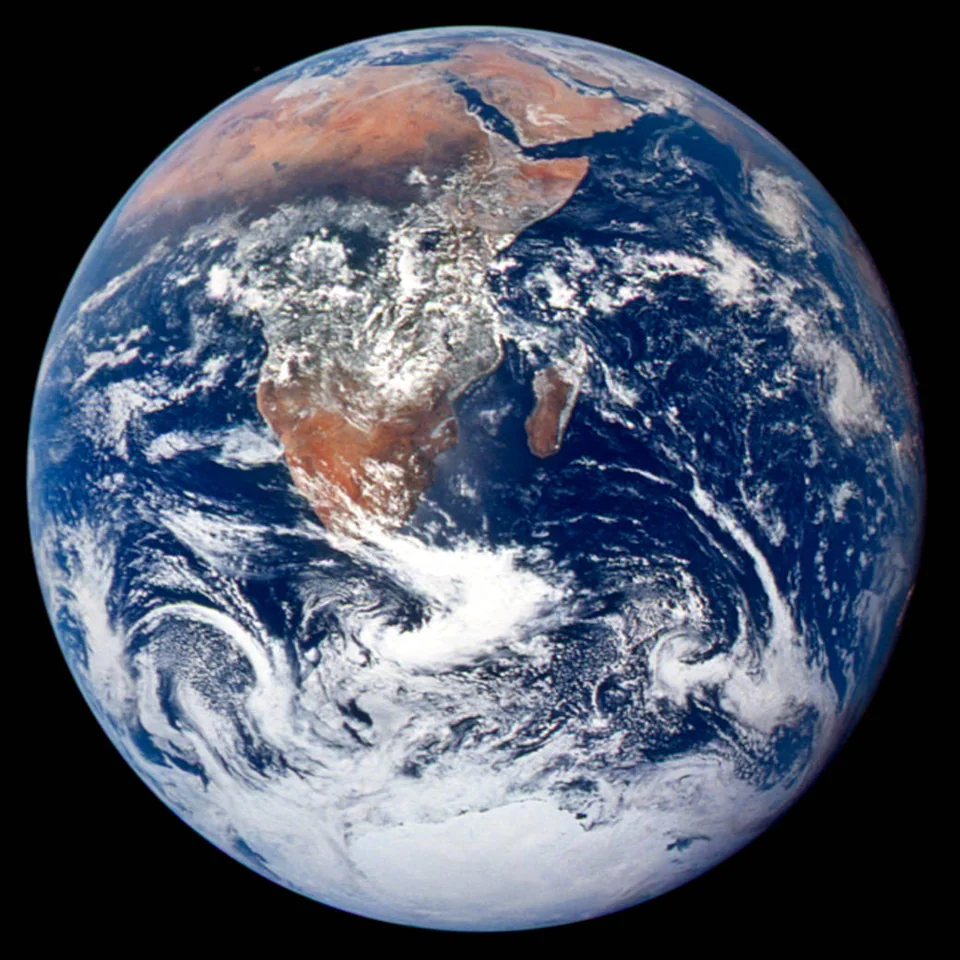
Real documentary case, consulted on 2026-10-14. Resized and encoded WebP version, with no crop or AI retouching.
Earthrise lets us compare three documented dates. The photograph is real; the two official records give its context.
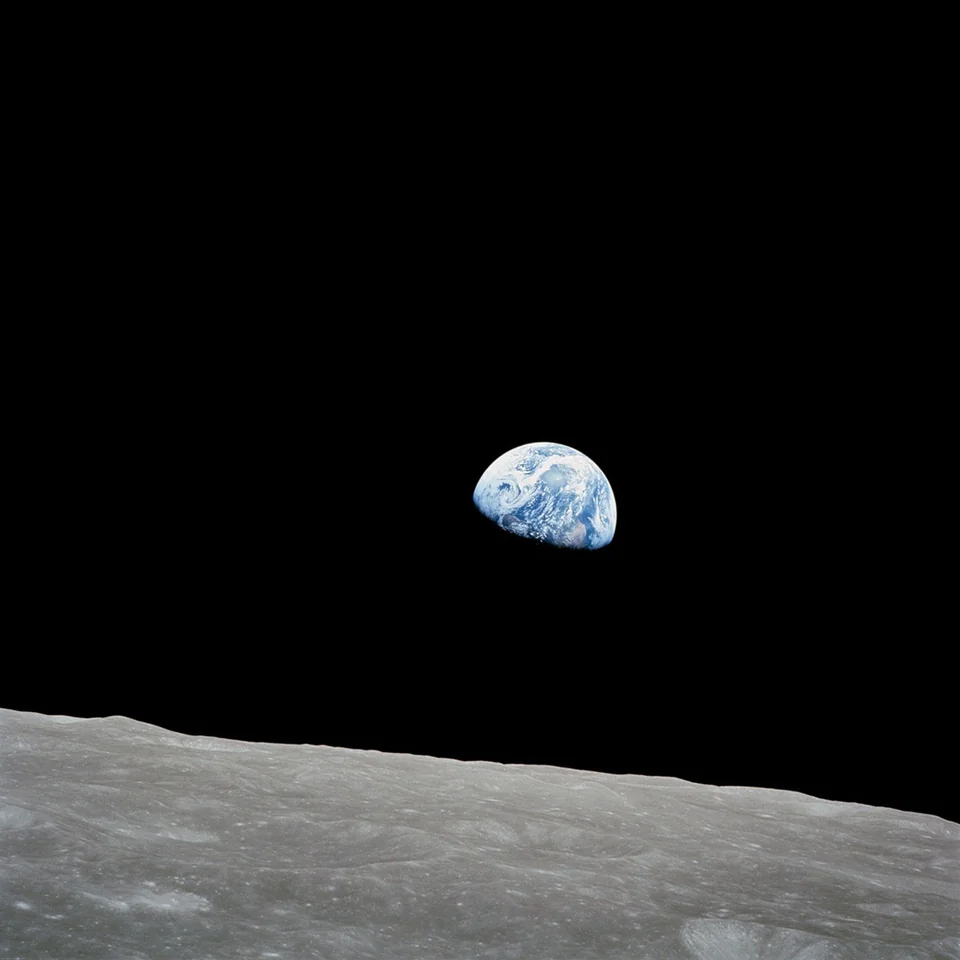
Republication in 2024 does not make this a photograph taken in 2024. Retain the capture date and the reference for each consulted page.
It dates your access to a source. It replaces neither capture nor publication and does not prove the page was identical earlier.
Sources consulted on . WebP version resized from the NASA-supplied file, without cropping or AI retouching.
02 / Evidence to keep
URL, dated capture, full caption and stated author or account.
Earlier files or URLs, crops, edits and earliest occurrence found.
Visual features, independent references, available metadata and confidence.
What is supported, contradicted or unresolved and the condition for revision.
PRACTICAL CHECK
A frequent misreading and the check that helps avoid it.
A similar-looking setting is not enough to locate a scene: repeated buildings, seasonal changes and camera angles can mislead.
Match at least two stable landmarks to a dated geographic reference, then check perspective and chronology. Keep competing locations in the record if uncertainty remains.
AFTER THE REVIEW
Compare image, crop and captions; the older appearance challenges a recent-first-publication claim without dating the original capture by itself.
Separate file history from the editorial claim. Correct the caption using independent clues.
Decision and review trail
What the check must help decide and what to retain so the choice can be reviewed.
Find the earliest accessible version, compare crops and details, then check place and date through independent clues. Missing metadata does not prove manipulation.
State only what image and context establish. Keep the original, compared versions and limits of location or dating.
OSINT / Official references
Find an independent geographic landmark and dated acquisition before interpreting the scene.
Compare roads, buildings and terrain with a dated IGN layer.
Limit to rememberCheck each layer’s origin, scale and date before comparing places.
Read source entryCompare satellite acquisitions of the same location.
Limit to rememberCloud cover, resolution, processing and acquisition date constrain interpretation.
Read source entryObserve a broad phenomenon across dates and layers.
Limit to rememberA coloured visual depends on its layer and is not itself a ground measurement.
Read source entryTypical situations for preparing a check. They do not describe completed assignments or actual observations.
Try relevant crop variants and record engines, dates and access limits. Also check the publication page and available contextual clues.
Describe the outcome as no match in the searches performed. It establishes neither originality, authenticity nor fabrication of the image.
Keep the analysed image, variants, queries and results or missing results with their conditions.
Compare the available file with its known distribution chain. Export, compression or transfer can change technical information; inspect what is actually present.
Use metadata as a contextual clue and seek external corroboration for date or location. An absent field is insufficient to establish manipulation.
Keep the examined file, fields read, known transformations and independent evidence supporting the conclusion.
Compare caption, first publication, supported place and period.
Separate file authenticity from caption accuracy.
Image, publications, context differences and bounded conclusion.
These questions complement the method. They help establish what is actually supported while retaining qualifications in the record.
Was the used version compared with earlier traces, framing and the recovered original caption? Reverse search provides a lead; it does not alone establish date, place or authenticity.
Fictional example: the state applies only to the criterion and scope described.
Were location and period clues compared with independent sources? Retain contradictions and distinguish present metadata, verified metadata and a visual hypothesis.
Fictional example: the state applies only to the criterion and scope described.
Is provenance evidence distinguished from the truth of a caption? Its absence alone is also insufficient to declare an image false.
Documentation consulted : C2PA · Content Credentials Explainer 2.2 ·
Fictional example: the state applies only to the criterion and scope described.
TOOLS / REGISTERS
Keep the received image and discovered versions separately. Reverse search finds occurrences; the earliest found does not prove the first publication or authorship.
03 / FAQ
They can help reconstruct file history but need corroboration.
Not always. It finds known occurrences, not necessarily the first publication.
Avoid premature certainty; examine compression, cropping and routine processing.
Only when necessary, supported and proportionate to risks for people.
04 / Official references
DOCUMENTED REFERENCE
This observation distinguishes acquisition from publication of its record. Treat the image as an identified document, then consider the metadata needed before taking measurements.
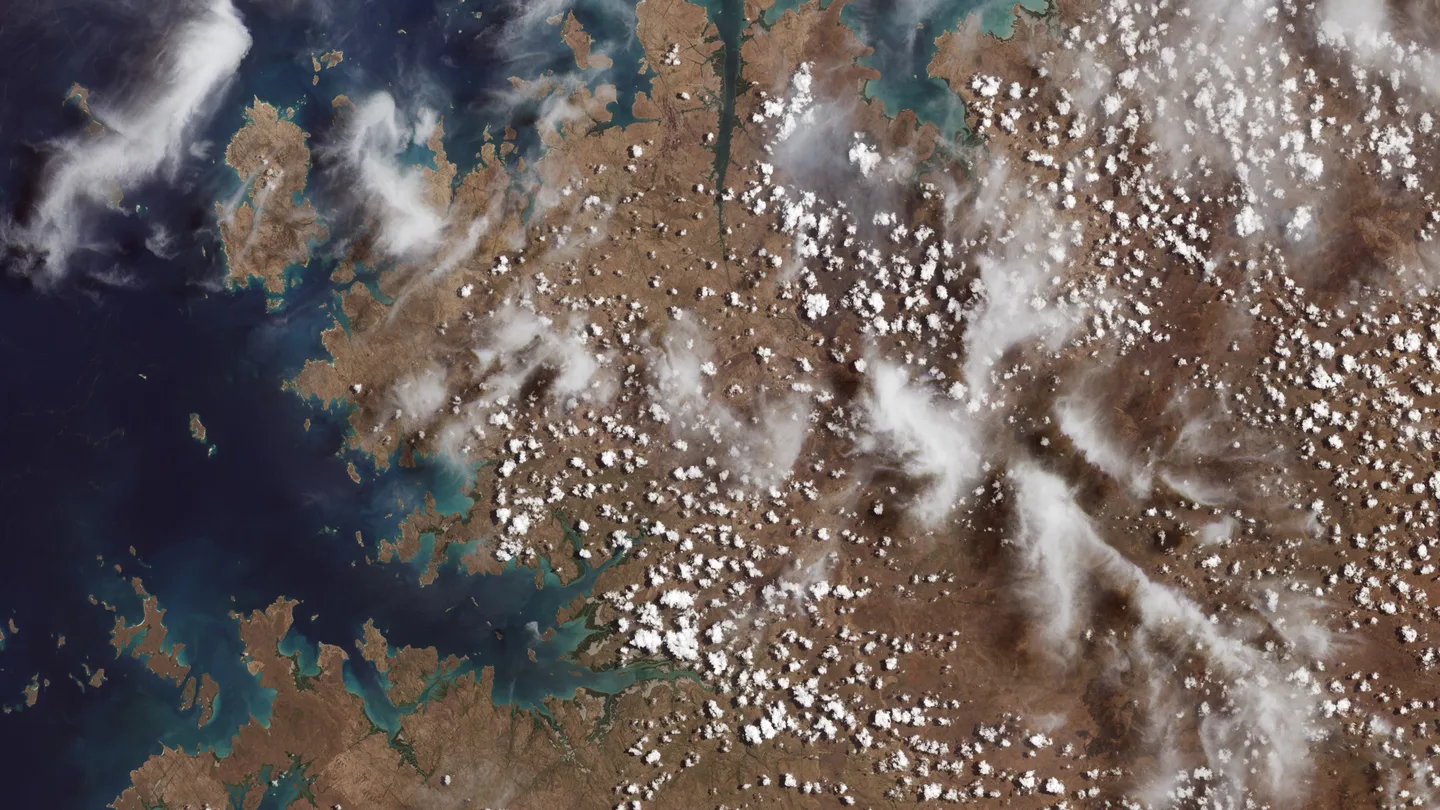
Islands, inlets and coastline of Kimberley, Western Australia, observed by Landsat 9 on 31 October 2021.
Real satellite image · NASA / USGS · Source · Reuse
NASA/USGS observation image. Resized and converted to WebP without cropping. Documentary use.
| Reference | Value or form | What it identifies |
|---|---|---|
| Landsat 9 | 2021-10-31 | Image acquisition. |
| NASA SVS · 31172 | 2022-01-13 | SVS record publication. |
| NASA / USGS | Kimberley, Australia | Credit and observed region. |
Retain sensor, bands, projection, resolution and processing when available. This editorial view alone does not support area measurement or a conclusion about change. Web resizing is disclosed in the credits.
Documentation consulted on .
DOCUMENTED REFERENCE
Table 12 of CIPA DC-X010-2017 documents these fields and XMP mappings. It is an explicit tag-identifier reference, not a summary of every Exif version. One software-displayed date can hide present or missing components.
| Reference | Value or form | What it identifies |
|---|---|---|
| DateTimeOriginal | 0x9003 · 36867 | Date and time when original data was generated. It contains no UTC offset by itself; do not arbitrarily append Z. |
| OffsetTimeOriginal | 0x9011 · 36881 | UTC offset associated with DateTimeOriginal. Link it to that date, not the receiving computer’s time. |
| SubSecTimeOriginal | 0x9291 · 37521 | Fractional seconds for DateTimeOriginal. Preserve the string and precision; decimals do not establish clock accuracy. |
| DateTimeDigitized | 0x9004 · 36868 | Date and time the image was stored digitally. Digitizing an old physical item and the historical scene depicted can have different dates. |
| OffsetTimeDigitized | 0x9012 · 36882 | UTC offset for DateTimeDigitized. Do not substitute OffsetTimeOriginal unless the operations are documented as identical. |
| SubSecTimeDigitized | 0x9292 · 37522 | Fractional seconds for DateTimeDigitized. Keep the group separate from capture fields to avoid combining different operations into one instant. |
Retain raw fields, metadata group, reader tool and original file. Software may rewrite or strip metadata; presence authenticates neither scene nor author. Download and file-copy times are separate observations.
Not without more evidence. A presumed scene location establishes neither camera settings nor the timezone rule at that date. Retain an unresolved local time and explain uncertainty.
Documentation consulted on .
DOCUMENTED REFERENCE
C2PA 2.4 defines signed manifests associated with digital content. It separates structural and binding validation from judging assertions. A validation indicator does not replace editorial image examination.
| Reference | Value or form | What it identifies |
|---|---|---|
| c2pa.claim.v2 | CBOR | A claim gathers assertion references about content at a given time. Its label and encoding do not establish that every real production event was recorded. |
| claim signature | COSE_Sign1_Tagged | Protects the claim. Check integrity, identity and trust using the validator’s configuration; a technical signer is not automatically the photographer. |
| hard binding | hash | Cryptographic binding under hashing and exclusion rules. The specification notes that covered EXIF GPS does not make the signer responsible for location accuracy. |
| soft binding | fingerprint / watermark | Content fingerprint or watermark matching versions with different bytes. Can help recover a separate manifest but cannot replace hard binding. |
| c2pa.ingredient.v3 | parentOf / componentOf | Describes a source or component. Read the relation and available references; a displayed chain guarantees neither original access nor a full history. |
| c2pa.actions.v2 | actions | Describes declared operations such as creation or editing. The specification’s news-photo crop and vignette example is explanatory, not an investigation of a real newsroom. |
Retain file, available manifest, stated signer, tool and version, result and limits. Missing Content Credentials can result from unsupported tools or stripped metadata; it does not establish falsity. Check context, place, date and rights separately.
No. It can also document generated or transformed content. Read available assertions and sources; technical validation is not an automatic real-photo or AI-free classification.
Documentation consulted on .
DOCUMENTED REFERENCE
The Orientation tag, identifier 274 (0x0112), specifies where the first row and first column of encoded data appear on the display. Some values require mirroring. The diagrams reuse one asymmetric shape and four corners marked A, B, C and D; they do not depict an edited photograph.
| Reference | Value or form | What it identifies |
|---|---|---|
| 1 | A B C D | Reference arrangement: first row at the top, first column on the left. |
| 2 | B A D C | Horizontal mirror of arrangement 1. |
| 3 | C D A B | 180° rotation of arrangement 1. |
| 4 | D C B A | Vertical mirror of arrangement 1. |
| 5 | A D C B | Transpose: horizontal mirror of arrangement 6. Width and height axes are exchanged. |
| 6 | D A B C | 90° clockwise rotation from 1. The axes are exchanged. |
| 7 | C B A D | Horizontal mirror of arrangement 8. The axes are exchanged. |
| 8 | B C D A | 90° counterclockwise rotation from 1. The axes are exchanged. |
Every diagram starts from the same 160 × 100 data: A top-left, B top-right, C bottom-right, D bottom-left. Corners after arranging, in top-left, top-right, bottom-right, bottom-left order.
1 · Reference arrangement: first row at the top, first column on the left.
The tag certifies neither the scene nor the date nor edit history. Software may already have transformed the pixels, retained or removed the tag, or rendered it differently. Before publishing variants, compare decoded appearance and metadata to avoid rotating twice. This reader imports or corrects no file.
Documentation consulted on .
DEEPER READING / PRACTICE
A photo is broadcast as an illustration of a recent event. The verification searches its origin, the previous versions and the visible elements that allow the scene to be located.
Updated on .
Release URL, legend, displayed date and features of the available file. Compare the occurrences found and distinguish first observed publication and real image creation.
An earlier occurrence can invalidate a recent assignment without establishing the exact location. A lack of search results does not prove that the image is original.
The dossier retains the image consulted, its occurrences, context and a limited conclusion. Record identified transformations or crops and their possible effect on interpretation.
PRACTICAL CASE / WORKED EXAMPLE
The example below is pedagogical. It shows how to move from a document to a qualified proposal, preserving the context, the contradictory elements and the information that the research does not yet allow to establish.
A photo is broadcast to illustrate a situation presented as present. An older occurrence shows the same visual, with another publication context.
Compare images, recordings, legends and observed dates. Keep the events and look for the elements that locate the scene. Differentiate invalidity and exact unknown origin.
The file may establish that the image is preceding the story without determining all the details of its creation. The conclusion retains this scope difference.
Not to. The tool coverage and file transformations limit search. The absence of found event describes the outcome of the consultation, not a general proof of first publication.
DETAILED WORKSHOP / APPLICATION
Assemble the viewed image, URL, legend and displayed date. Identify visual characteristics and possible transformations to compare the found versions.
Examine the events, their context and their dates. Check the signs and visible elements. Distinguish first observed publication, represented scene and file creation.
If an earlier occurrence invalidates a recent attribution, limit the conclusion to this point. The exact location or author may remain unknown despite this useful verification.
The case is concluded for the actual elements. Negative research and missing resources remain described with their coverage and limits.
Transmit images, occurrences and comparison. The conclusions refer to observable details rather than a general similarity that is difficult to verify.
ANNOTATED WORKING DOCUMENT / REVIEW GRID
The folder collects the file consulted, versions, legends and observed dates. It distinguishes recent attribution, antiquity of dissemination and origin of creation when these elements are not all established.
On a small screen, scroll the grid horizontally to read all three columns.
| Observation | Supported interpretation | Next step |
|---|---|---|
| An older occurrence corresponds to the same visual. | The image precede the recent context in the publications found. | Keep the correspondence details and qualify the award invalid. |
| The recharge makes certain elements difficult to compare. | The similarity must be examined before associating the files. | Search for a more comprehensive version and keep the transformations. |
| Research does not find any other occurrence. | The result describes the coverage of the consultation, not a proven originality. | Present this limit and supplement with other relevant indications. |
The final verification separates the conclusions made from the unknown details. A proven antiquity can be useful without automatically identifying the exact author, place or date of creation of the image.
REPORTING / EXAMPLE WORDING
An invalid attribution does not mean that all the creation details are known.
Separate proven conclusions from indications and absence of research results.
The occurrences found establish the described element. The author, the exact place or date that is not documented remains open questions.